0171-4081962
98962-77713
0171-4081962
98962-77713
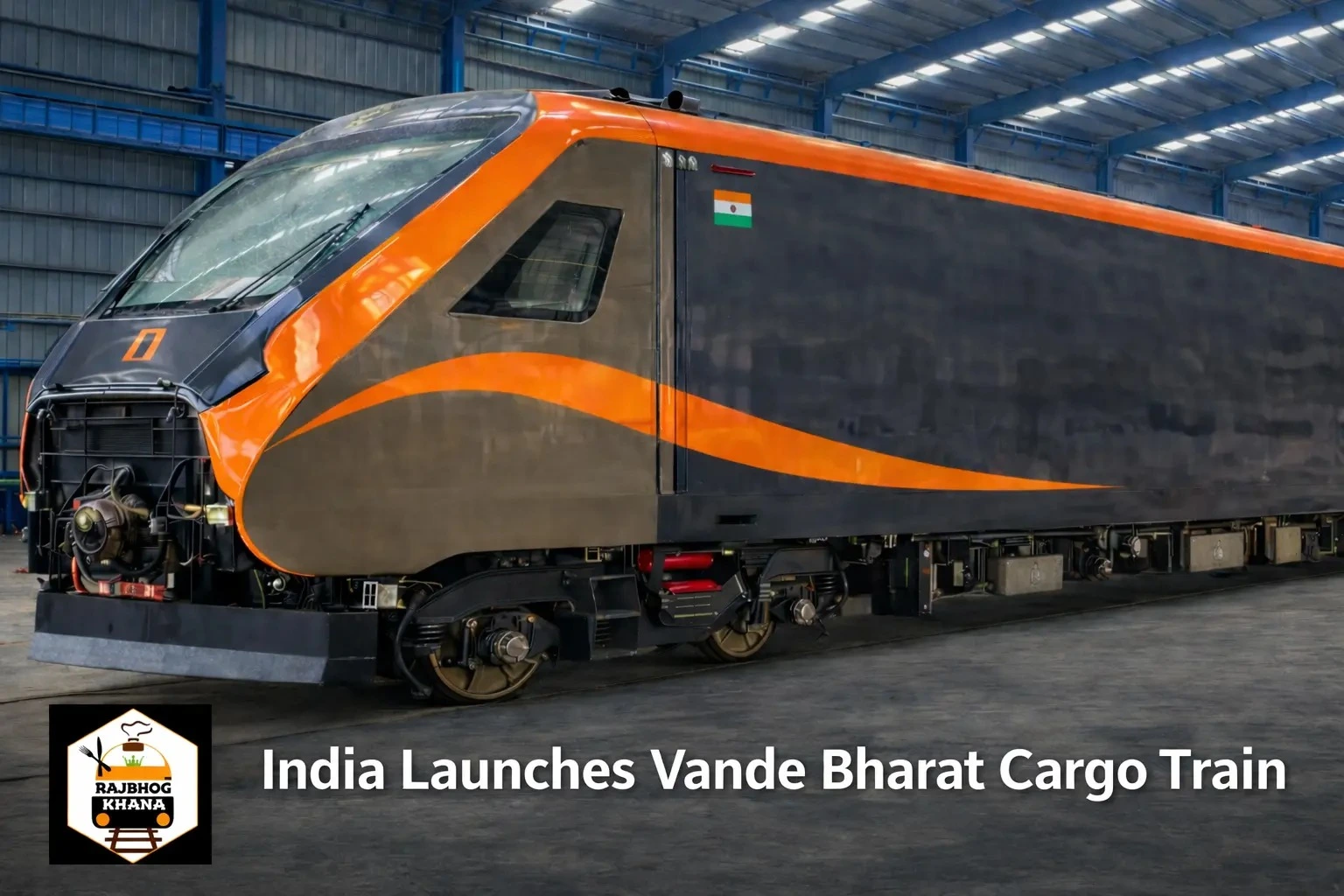
Indian Railways moves over 1.4 billion tonnes of freight every year. Yet for decades, the average speed of a goods train on Indian tracks has crawled along at just 50 km/h. That is slower than many city buses. But a new chapter is being written, and it starts with a train you already know. The Vande Bharat Cargo train is here, and it is built for speed.
Since its launch in 2019, the Vande Bharat Express has become one of India's most loved trains, currently running across 162 routes nationwide with an occupancy rate that crossed 102% in FY 2024–25. Building on that success, Indian Railways has now developed a freight version of the same platform, manufactured at the Integral Coach Factory (ICF) in Chennai under the Make in India initiative.
The 16-car EMU rake is designed to carry up to 264 tonnes of palletised cargo at speeds of up to 160 km/h, a significant improvement over conventional freight trains that typically run below 100 km/h. That is not just an upgrade. That is a complete reset of what Indian freight rail can do.
The Delhi–Mumbai corridor handles one of the highest volumes of commercial freight in the country, covering roughly 1,400 km. Faster movement along this route means lower logistics costs, quicker restocking for businesses, and a genuine alternative to road transport for time-sensitive cargo.
With an average operating speed of 90 km/h, nearly double the current 50 km/h average, goods that once took two days to move between these cities could arrive in a fraction of that time. For manufacturers, retailers, and exporters, that kind of reliability changes everything.
India loses an estimated 16% of its fruit and vegetable produce every year due to poor cold chain infrastructure. The Vande Bharat Cargo train directly addresses this. Its reefer container capacity allows for temperature-controlled transport of perishables, dairy products, fresh produce, and pharmaceuticals, keeping goods intact from origin to destination without the delays that road transport often brings.
The pneumatic roller floor system and wide automatic plug doors are engineered for rapid, mechanised loading and unloading at dedicated terminals, cutting turnaround times that have long held rail freight back from competing with road logistics.
Before commercial launch, RDSO will perform multiple checks, including oscillation testing, emergency braking distance evaluation, and full-load performance assessments. Nothing goes on the track until it is proven safe and reliable.
If trials proceed as planned, the Vande Bharat Cargo EMU could become a blueprint for similar services on other high-density freight corridors across India, fundamentally changing how the country moves goods at scale.
India's logistics sector is growing fast and the pressure to move goods smarter, faster, and cheaper has never been greater. The Vande Bharat Cargo train is not just a new vehicle on old tracks. It is a signal that Indian Railways is serious about competing in the modern supply chain world.
Once trials are complete and the Delhi NCR to Mumbai route goes live, the ripple effect will be felt across industries, from farmers getting their produce to markets fresh, to pharma companies meeting delivery deadlines, to e-commerce businesses cutting last-mile costs.
The Vande Bharat story started with passengers. It is now making room for cargo. If this first corridor succeeds, the rest of India's freight network may never look the same again.
While the Vande Bharat Cargo train is transforming freight movement, passengers on Vande Bharat Express trains can also enjoy the convenience of fresh, hot meals delivered right to their seats. Planning a trip on the Delhi NCR–Mumbai route? Don't wait—order your favorite food online in train and make your journey as seamless and enjoyable as the train itself.

For a new experience download
RAJBHOG KHANA app now