0171-4081962
98962-77713
0171-4081962
98962-77713
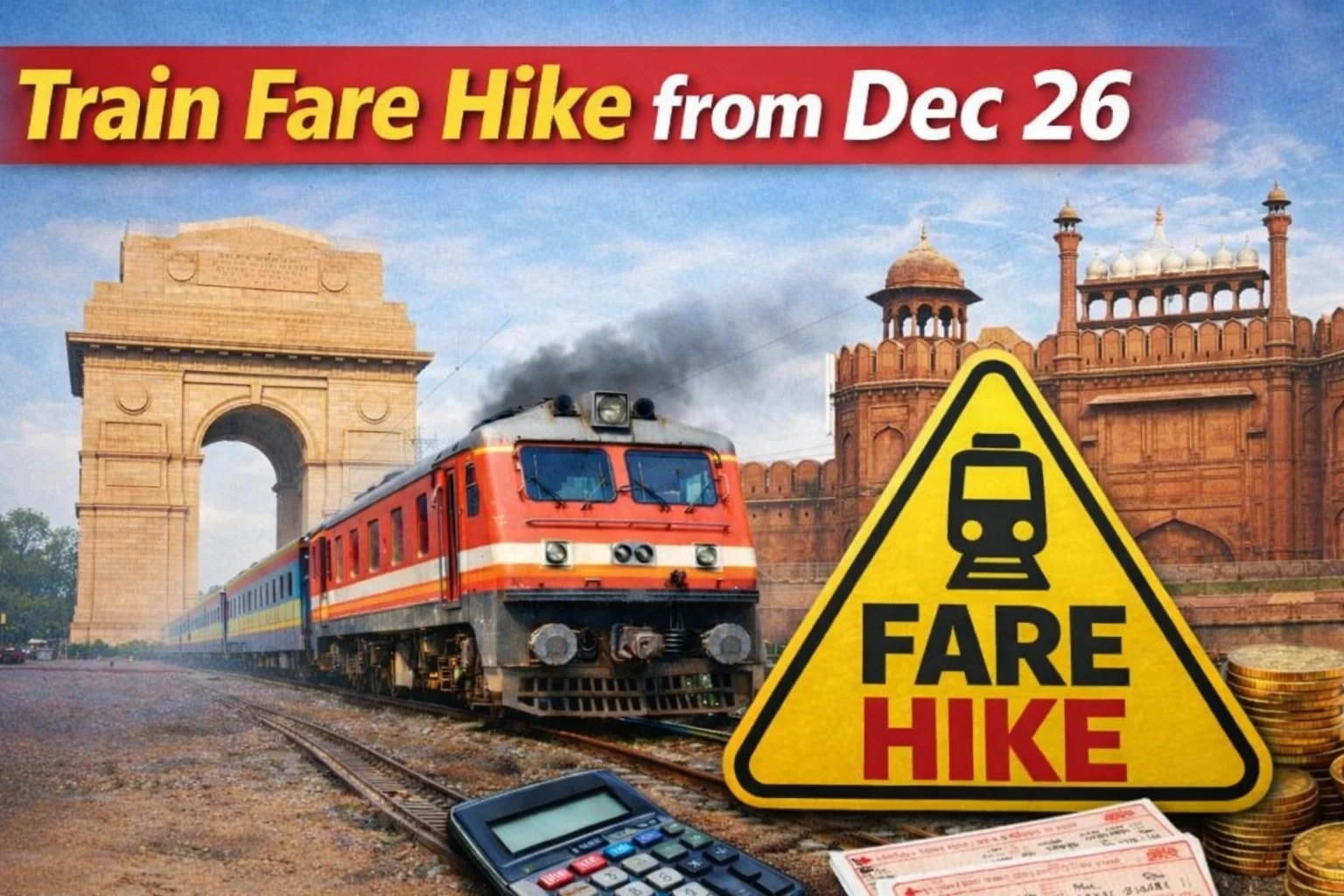
Indian Railways has introduced a revised passenger fare structure effective December 26, 2025, bringing small, rationalised changes to ticket prices across selected travel categories. The revision is aimed at balancing rising operational costs while ensuring that rail travel remains affordable for daily commuters and short-distance passengers.
For millions of Indians who depend on trains for work, education, and long-distance travel, this update answers the most important questions: What has changed, who is affected, how much more will passengers pay, and why the revision was necessary.
1.) Effective Date: December 26, 2025
2.) Applicable To: Tickets booked on or after this date
3.) Not Applicable To: Tickets booked before December 26, 2025
4.) No Change In: Reservation fees, superfast surcharge, GST, Tatkal rules, or concession policies
Passengers who booked tickets before December 26 will continue to travel at old fares, even if the journey date falls after the revision.
The fare revision is part of a long-term effort to ensure the financial sustainability and service quality of passenger rail services. Key reasons include:
1.) Rising fuel, maintenance, and infrastructure costs
2.) Need for better safety, cleanliness, and punctuality
3.) Avoiding sudden or steep fare hikes by adopting a gradual approach
4.) Protecting commuters and short-distance travelers
Instead of a flat increase, Indian Railways opted for distance-based and class-specific adjustments, keeping the impact minimal for most passengers.
The following passenger segments remain completely unaffected:
1.) Suburban train services
2.) Season tickets (suburban and non-suburban)
3.) Second Class Ordinary travel up to 215 km
This ensures continued affordability for daily commuters, students, workers, and regional travelers.
Distance-Based Increase
(Second Class Ordinary – Long Distance)
| Distance | Additional Fare |
|---|---|
| Up to 215 km | No change |
| 216–750 km | ₹5 |
| 751–1250 km | ₹10 |
| 1251–1750 km | ₹15 |
| 1751–2250 km | ₹20 |
| Train/Class | Increase |
|---|---|
| Ordinary, Sleeper, First Class (Non-AC) | +1 paise per km |
| Mail & Express (all classes) | +2 paise per km |
| AC Chair Car | +2 paise per km |
| AC 3-Tier | +2 paise per km |
| AC 2-Tier | +2 paise per km |
| First AC | +2 paise per km |
Despite the fare revision, passengers will not see any change in:
1.) Reservation charges
2.) Superfast surcharge
3.) Tatkal booking rules
4.) GST rates
5.) Senior citizen and other concessions
This ensures the final ticket price increase remains controlled and predictable.
Daily Commuters
No impact. Suburban services and season tickets remain unchanged.
Short-Distance Travelers
Journeys up to 215 km in Second Class Ordinary remain affordable with zero increase.
Long-Distance Non-AC Passengers
A small increase of ₹5–₹20, depending on distance.
AC & Express Train Passengers
A slightly higher increase reflecting premium services, but still modest on a per-km basis.
1.) 500 km Sleeper Class journey: ₹5–₹10 more
2.) 1,200 km AC 3-Tier journey: ₹20–₹30 more (approx.)
3.) Short trips under 215 km: No change
For most travelers, the impact is minor and manageable.
The revised fares apply to a wide range of passenger trains, including:
Covered Train Services
1.) Premium & High-Speed:
Vande Bharat, Rajdhani, Tejas, TejasRajdhani, Shatabdi, Duronto, Gatimaan
2.) Long-Distance & Special Trains:
Humsafar, Amrit Bharat, Mahamana, GaribRath, Antyodaya, Yuva Express, Jan Shatabdi
3.) Regional & Modern Services:
Namo Bharat Rapid Rail and Ordinary non-suburban trains
4.) Special Coaches:
Anubhuti Class and AC Vistadome
AC MEMU and AC DEMU services (where applicable) remain excluded.
When did the revised fares come into effect?
From December 26, 2025, for tickets booked on or after this date.
Will already booked tickets be affected?
No. Tickets booked before December 26 remain valid at old fares.
Why did Indian Railways increase fares now?
To manage rising operational costs while avoiding sudden fare hikes and protecting commuters.
Are reservation fees or GST increased?
No. All additional charges remain unchanged.
Will passengers get better facilities after the fare revision?
The revision supports investments in safety, maintenance, cleanliness, punctuality, and infrastructure upgrades over time.
Is rail travel still affordable?
Yes. Even after the revision, rail travel remains one of the most economical long-distance transport options in India.
Which passengers are most affected?
Primarily long-distance travelers and passengers using AC or premium trains.
The Indian Railways fare revision effective December 26, 2025, reflects a measured, passenger-focused approach. By safeguarding commuters and short-distance travelers while introducing modest increases for long-distance and premium travel, the Railways has balanced affordability with long-term service sustainability.
For most passengers, the change means small adjustments rather than major disruption. Staying informed and planning ahead will help travelers continue to enjoy reliable, affordable rail journeys in 2026 and beyond.

For a new experience download
RAJBHOG KHANA app now