0171-4081962
98962-77713
0171-4081962
98962-77713
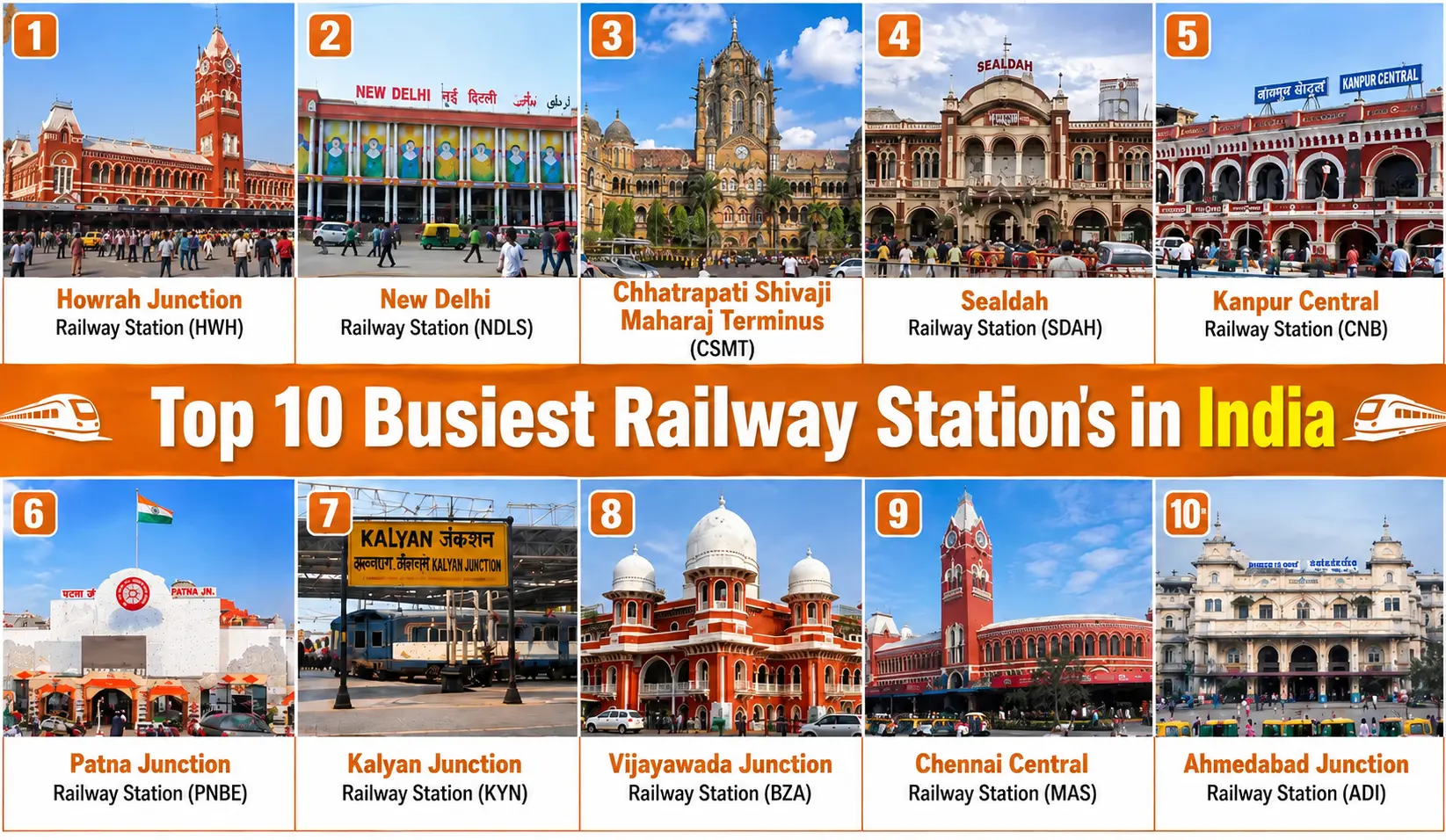
Indian Railways is one of the world's largest railway networks, connecting cities, towns and remote areas across the country. Major railway stations handle lakhs of passengers every day and serve as important transport hubs for long-distance, regional and suburban trains. In 2026, stations such as Howrah, Sealdah, New Delhi, Kanpur and Chennai Central continue to see heavy passenger and train movement. The ranking below is based on passenger footfall, train operations, connectivity and available railway data. Since passenger traffic changes regularly, this should be viewed as a practical list rather than an official Indian Railways ranking.
Howrah Junction is one of India's busiest and oldest railway stations. Located in Howrah, West Bengal, it serves as a major gateway to Kolkata and eastern India. The station is operated by both Eastern Railway and South Eastern Railway. Indian Railways records show very high passenger and train movement at Howrah, with earlier official data reporting more than 8.8 lakh passengers daily. The station currently has 23 platforms and connects important routes towards Delhi, Mumbai, Chennai, Northeast India and several eastern cities.
Other Details of Howrah Junction:
New Delhi Railway Station is the main railway hub of India's capital. Situated near Connaught Place, it handles a large number of long-distance and regional trains every day. The station has 16 platforms and is directly connected with the Delhi Metro network. Northern Railway data indicates that more than 250 trains start, terminate, or pass through the station daily, while recent operational information shows even higher daily train movements. Its passenger footfall is commonly estimated at around five lakh per day and can increase considerably during festivals.
Other Details of New Delhi Station:
Chhatrapati Shivaji Maharaj Terminus is one of Mumbai's most important railway hubs and a UNESCO World Heritage Site. The historic station combines Victorian Gothic architecture with traditional Indian design elements. It serves both suburban and long-distance passengers. CSMT has 18 platforms, with seven generally used for suburban services and 11 for long distance trains. It connects Mumbai with several major cities and is also linked with the city's metro network. The station remains an important part of Mumbai's busy public transport system.
Other Details of CSMT:
Sealdah Railway Station is a major railway terminal in Kolkata and one of India's busiest suburban railway stations. It handles a very large number of daily commuters travelling across Kolkata and surrounding areas. The station has 21 platforms and 28 tracks, according to available station information. Eastern Railway has also carried out platform improvements to accommodate longer suburban trains. Sealdah is connected to several important routes across West Bengal and eastern India, while its metro connection makes it an important interchange point for daily commuters.
Other Details of Sealdah Station:
Kanpur Central is a major railway station in Uttar Pradesh and an important stop on the Delhi to Howrah railway route. Its location makes it a key rail connection between northern and eastern India. The station handles a very high number of trains, including originating, terminating and passing services. A Comptroller and Auditor General report recorded 328 trains handled during the day and 10 platforms at the station. Kanpur Central is particularly important for passengers travelling between Delhi, Prayagraj, Varanasi, Lucknow, Kolkata and other major cities.
Other Details of Kanpur Central:
Patna Junction is one of Bihar's most important railway stations and a major hub on the Howrah to Delhi route. The station provides connectivity to cities across northern, eastern and central India. It has 10 platforms and 15 tracks and is operated by East Central Railway. Available station data places its passenger traffic among the highest in the country. Patna Junction also serves several important trains connecting Bihar with Delhi, Mumbai, Kolkata, Ranchi, Gaya and other destinations.
Other Details of Patna Junction:
Kalyan Junction is a crucial railway station in Maharashtra and an important part of Mumbai's suburban railway network. It sits where major railway routes split toward Kasara and Khopoli. The station handles heavy suburban traffic along with long-distance trains. Available station information reports around 3.6 lakh passengers per day and eight operational platforms, with additional platforms under development. Kalyan also plays an important role in managing railway traffic moving between Mumbai and destinations in northern and central Maharashtra.
Other Details of Kalyan Junction:
Vijayawada Junction is one of the busiest railway stations in Andhra Pradesh and an important railway hub in South India. Its strategic location connects several major routes across Andhra Pradesh, Telangana, Tamil Nadu and eastern India. The station handles both passenger and freight traffic. Available data reports around 1.4 lakh passengers per day, more than 250 passenger trains and around 150 goods trains using the station daily. It has 10 platforms and is an important junction for trains travelling through the region.
Other Details of Vijayawada Junction:
Chennai Central, officially Puratchi Thalaivar Dr M.G. Ramachandran Central Railway Station, is a major railway gateway to South India. It connects Chennai with Delhi, Mumbai, Kolkata, Hyderabad, Bengaluru and several other cities. The station is part of Southern Railway and is classified as an NSG 1 station. Available data reports around 7.3 lakh passengers per day when associated suburban operations are considered. The station has 17 platforms across the main and suburban terminals and provides convenient connections with Chennai's urban transport network.
Other Details of Chennai Central:
Ahmedabad Junction, also known as Kalupur Railway Station, is the main railway station serving Ahmedabad, Gujarat. It is an important hub of Western Railway and connects Gujarat with Delhi, Mumbai, Rajasthan, Madhya Pradesh and several other regions. The station handles a large number of originating, terminating and halting trains. Available railway information lists Ahmedabad Junction as an NSG 1 station. Platform counts can vary in published sources because of redevelopment and operational changes, so current platform arrangements should be checked before travelling.
Other Details of Ahmedabad Junction:
The busiest railway stations in India generally have one or more of these characteristics:
Passenger numbers can also increase significantly during Diwali, Holi, summer holidays, Durga Puja and other major festivals.
Travelling through a busy station can be easier with a little preparation.
When travelling from busy railway stations, arranging a meal before boarding can make the journey more comfortable. Passengers can order food in train and have meals delivered to their selected railway station during the journey. Choosing a reliable railway food delivery service can help passengers enjoy fresh meals without leaving their seats to search for food at crowded stations.
1. Which is the busiest railway station in India in 2026?
Howrah and Sealdah are among India's busiest stations by passenger movement, while New Delhi and other major hubs also handle extremely high traffic.
2. Which railway station has the most platforms?
Howrah Junction has 23 platforms in the current commonly reported station configuration.
3. Which is the busiest railway station in Delhi?
New Delhi Railway Station is the main and one of the busiest railway stations serving Delhi.
4. Which railway station is the busiest in South India?
Chennai Central is one of the busiest major railway stations in South India and an important long-distance rail hub.
5. Which railway station is famous for its heritage architecture?
Chhatrapati Shivaji Maharaj Terminus in Mumbai is internationally recognised for its historic architecture and UNESCO World Heritage status.
6. Are passenger numbers fixed throughout the year?
No. Passenger traffic changes by season, festivals, holidays, special trains and local travel demand. Therefore, treat daily figures as approximate.

For a new experience download
RAJBHOG KHANA app now